China Fiber Optic Cable

non toneable flat drop dry cable cross section

GYFXBY SST Flat Drop Cable Non-toneable Gel-Free HDPE

SST (Self-Supporting,Simple Installation, Single-Tube) Flat Drop Cable is designed for outdoor installations, typically used in FTTH and...
sst flat drop cable gel-filled

GYFXBY SST Flat Drop Cable Dielectric Gel-Filled HDPE

SST (Self-Supporting,Simple Installation, Single-Tube) Flat Drop Cable is designed for outdoor installations, typically used in FTTH and...
adss fiber optic cable rayoptic

Fiber Optic Cable ADSS Single Jacket PE Span 50 to 200M

All-dielectric self-supporting (ADSS) cable is a type of optical fiber cable that is strong enough to support itself...
fiber optic cable

Fiber Optical Cable Flat Drop Toneable Gel-Free Dry FTTP FTTH

Fiber optical cable toneable flat drop is designed for self-supporting, direct-buried and duct installations. Ideal for drop...

Rayoptic Communication Co., Ltd (Rayoptic) is a leading manufacturer of high-quality fiber optic cables based in China. We offer a comprehensive range of fiber optic cables designed to meet the diverse needs of telecommunications, data centers, and industrial networks. Our cables are engineered for superior performance, durability, and reliability, supporting a variety of applications from short-distance connections to long-haul communications.

Types of Fiber Optic Cables:

  1. Single Mode Fiber Optic Cables:

    • Description: Ideal for long-distance data transmission with minimal signal loss and high performance.
    • Core Diameter: 8.3 µm
    • Wavelengths: 1310 nm and 1550 nm
    • Applications: Telecommunications networks, inter-city connections, and high-speed data transfer.
  2. Multimode Fiber Optic Cables:

    • Description: Suitable for short to medium-distance applications with high data transmission rates over shorter distances.
    • Core Diameter: 50 µm or 62.5 µm
    • Wavelengths: 850 nm and 1300 nm
    • Applications: Data centers, campus networks, and local area networks (LANs).
  3. Armored Fiber Optic Cables:

    • Description: Provides extra protection against physical damage, making them suitable for harsh environments.
    • Features: Steel or aluminum armor for enhanced protection against mechanical stresses and rodent attacks.
    • Applications: Outdoor installations, industrial environments, and areas prone to physical damage.
  4. All Dielectric Self-Supporting (ADSS) Fiber Optic Cables:

    • Description: Designed for aerial installations without the need for additional support structures.
    • Features: Non-metallic materials to reduce interference and corrosion risk.
    • Applications: Aerial installations along utility poles, building-to-building connections, and long-distance outdoor networks.
  5. Loose Tube Fiber Optic Cables:

    • Description: Features fibers housed in loose tubes for flexibility and protection.
    • Applications: Suitable for outdoor and underground installations requiring flexibility and environmental protection.
  6. Tight-Buffered Fiber Optic Cables:

    • Description: Fibers are coated with a tight buffer for ease of handling and installation.
    • Applications: Ideal for indoor use, patch cords, and short-distance connections.
  7. Indoor/Outdoor Fiber Optic Cables:

    • Description: Versatile cables that can be used in both indoor and outdoor environments.
    • Features: Designed to meet environmental requirements for both settings.
    • Applications: Building-to-building connections, campus networks, and mixed-use installations.

Specifications:

  1. Fiber Type:

    • Single Mode Fiber (SMF):
      • Core Diameter: 8.3 µm
      • Cladding Diameter: 125 µm
      • Wavelengths: 1310 nm and 1550 nm
    • Multimode Fiber (MMF):
      • Core Diameter: 50 µm or 62.5 µm
      • Cladding Diameter: 125 µm
      • Wavelengths: 850 nm and 1300 nm
  2. Cable Construction:

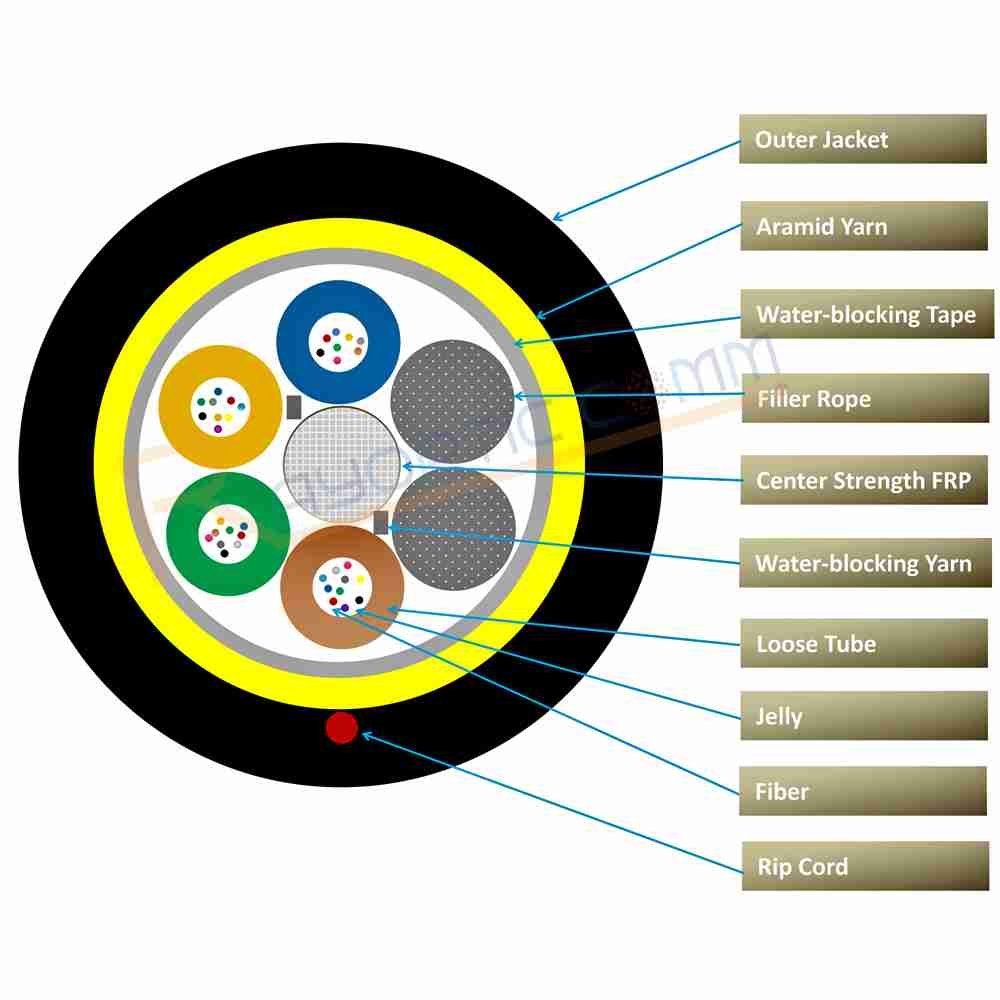
    • Outer Jacket: UV-resistant and durable for various environmental conditions.
    • Strength Members: Aramid yarn, fiberglass, or steel for added protection and tensile strength.
    • Core Design: Loose tube or tight-buffered fibers for flexibility and protection.
  3. Mechanical Specifications:

    • Bending Radius: Minimum bend radius to avoid performance issues, specified in millimeters (mm).
    • Cable Diameter: Outer diameter affecting installation and space considerations.
    • Weight: Weight per unit length, influencing installation and support needs.
  4. Performance Specifications:

    • Insertion Loss: Measure of signal loss through the cable, specified in decibels (dB).
    • Return Loss: Measure of signal reflection at the connector interface, specified in decibels (dB).
    • Transmission Speeds: Compatible with various data rates, including 1G, 10G, 40G, and 100G, depending on fiber type and application.
  5. Standards and Compliance:

    • Standards: Complies with industry standards such as IEC 60794, TIA/EIA-568, and other relevant specifications.
    • Certification: Meets national and international quality and safety standards for reliable performance.

Benefits of Rayoptic Fiber Optic Cables:

  • High Performance: Designed for minimal signal loss and high-speed data transmission.
  • Durability: Constructed to withstand environmental stresses and mechanical damage.
  • Versatility: Available in multiple types and configurations to meet different installation requirements.
  • Reliability: Ensures consistent performance and long-term reliability in various applications.

Contact Information:

For more information about our fiber optic cables or to discuss your specific requirements, please contact Rayoptic Communication Co., Ltd (Rayoptic) at sales@rocfttx.com.

logo rayoptic comm
* We respect your privacy. When you submit your contact information, we agree to only contact you in accordance with our Privacy Policy.
TYPE TO SEARCH