All Dielectric Self Supporting Fiber Optic Cable

Overview: All Dielectric Self-Supporting (ADSS) fiber optic cables are designed for aerial installations where the cable is suspended between poles or other support structures without the need for additional metallic support. These cables are engineered to provide reliable performance in outdoor environments while offering easy installation and high resistance to environmental stresses.

Key Features:

  • All Dielectric Construction: The cable contains no metal components, making it immune to electrical interference and corrosion. This feature is ideal for installations near electrical lines or in harsh environments.
  • Self-Supporting Design: Incorporates a built-in support structure, such as high-strength aramid yarn, which allows the cable to be suspended without additional supporting hardware or messengers.
  • Durable Materials: Constructed with robust materials to withstand environmental conditions such as UV radiation, temperature extremes, and physical impact.
  • High Performance: Provides low attenuation and high bandwidth, ensuring reliable high-speed data transmission over long distances.

Specifications:

  1. Fiber Type:
    • Single-Mode Fiber (SMF): Suitable for long-distance communication with minimal signal loss.
      • Typical Wavelengths: 1310 nm, 1550 nm
      • Typical Attenuation: ≤ 0.35 dB/km at 1550 nm
    • Multi-Mode Fiber (MMF): Used for shorter distances, offering higher modal dispersion.
      • Typical Wavelengths: 850 nm, 1300 nm
      • Typical Attenuation: ≤ 3.5 dB/km at 850 nm
  2. Cable Construction:
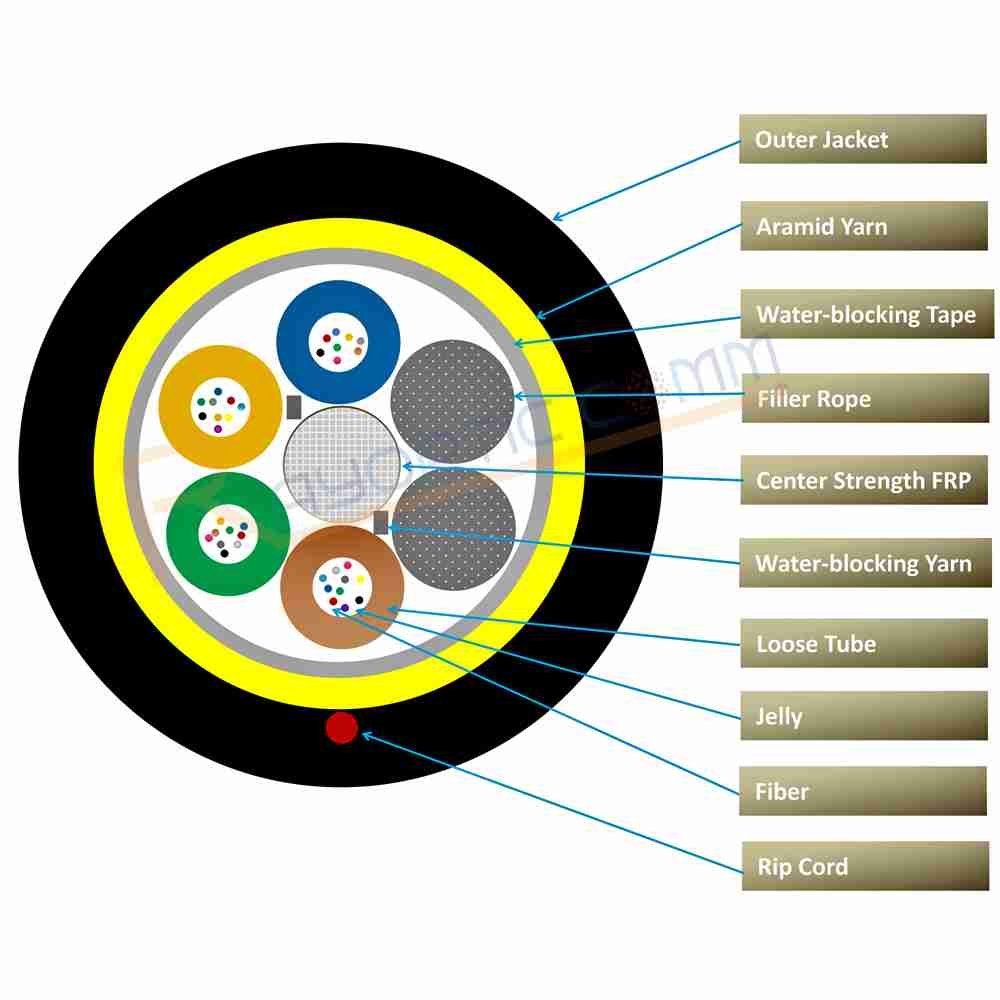
    • Outer Jacket: UV-resistant and weatherproof jacket to protect against environmental damage.
    • Strength Members: High-strength aramid yarn or similar materials for internal support and to enable self-supporting capabilities.
    • Dielectric Materials: All dielectric construction with no metal components, protecting against electrical interference and corrosion.
    • Bend Insensitive Fiber (Optional): Some cables may include bend-insensitive fibers to minimize signal loss during installation and operation.
  3. Mechanical Specifications:
    • Tensile Strength: The cable’s ability to withstand mechanical loads, typically specified in Newtons (N).
    • Bending Radius: Minimum radius the cable can be bent without damage, usually specified in millimeters (mm).
    • Cable Diameter: Outer diameter of the cable, affecting installation and space requirements.
    • Weight: Weight per unit length, influencing the load on supporting structures.
  4. Environmental Specifications:
    • Temperature Range: Operational temperature range to ensure performance under varying environmental conditions.
      • Typical Range: -40°C to +70°C
    • Water Resistance: Protection against water ingress, often achieved through gel-filled or water-blocking designs.
    • UV Resistance: Coating designed to resist degradation from prolonged exposure to sunlight.
  5. Installation Specifications:
    • Self-Supporting: Designed to be suspended directly from poles or structures without additional support.
    • Cladding Material: Includes protective materials around the fibers, such as aramid yarn or other reinforcement, to enhance durability.
  6. Standards and Compliance:
    • Standards: Conforms to industry standards such as IEC 60794, GR-20, or other relevant specifications.
    • Certification: May be certified to meet national or international quality and safety standards.

Typical Applications:

  • Telecommunications Networks: Ideal for high-speed data transmission in telecom networks, including broadband and mobile communications.
  • Broadband and Data Networks: Connects different network nodes with reliable and high-performance links.
  • Utility and Infrastructure: Used in utility infrastructure and other applications where aerial installation is preferred.
  • Urban and Rural Installations: Suitable for both city networks and remote areas where a self-supporting design simplifies installation.

Benefits:

  • Corrosion and Interference Resistant: The all-dielectric design prevents issues related to electrical interference and corrosion.
  • Easy Installation: Self-supporting design reduces the need for additional support structures or hardware.
  • Durability: Engineered to withstand environmental stresses and physical impacts, ensuring long-term reliability.
  • High Performance: Supports high-speed data transmission with low signal loss and minimal attenuation.

Contact Information:

For more information about our all dielectric self-supporting fiber optic cables or to discuss your specific requirements, please contact Rayoptic Communication Co., Ltd (Rayoptic) at sales@rocfttx.com.

adss fiber optic cable rayoptic

Fiber Optic Cable ADSS Single Jacket PE Span 50 to 200M

All-dielectric self-supporting (ADSS) cable is a type of optical fiber cable that is strong enough to support itself...

Overview: All Dielectric Self-Supporting (ADSS) fiber optic cables are designed for aerial installations where the cable is suspended between poles or other support structures without the need for additional metallic support. These cables are engineered to provide reliable performance in outdoor environments while offering easy installation and high resistance to environmental stresses.

Key Features:

  • All Dielectric Construction: The cable contains no metal components, making it immune to electrical interference and corrosion. This feature is ideal for installations near electrical lines or in harsh environments.
  • Self-Supporting Design: Incorporates a built-in support structure, such as high-strength aramid yarn, which allows the cable to be suspended without additional supporting hardware or messengers.
  • Durable Materials: Constructed with robust materials to withstand environmental conditions such as UV radiation, temperature extremes, and physical impact.
  • High Performance: Provides low attenuation and high bandwidth, ensuring reliable high-speed data transmission over long distances.

Specifications:

  1. Fiber Type:
    • Single-Mode Fiber (SMF): Suitable for long-distance communication with minimal signal loss.
      • Typical Wavelengths: 1310 nm, 1550 nm
      • Typical Attenuation: ≤ 0.35 dB/km at 1550 nm
    • Multi-Mode Fiber (MMF): Used for shorter distances, offering higher modal dispersion.
      • Typical Wavelengths: 850 nm, 1300 nm
      • Typical Attenuation: ≤ 3.5 dB/km at 850 nm
  2. Cable Construction:
    • Outer Jacket: UV-resistant and weatherproof jacket to protect against environmental damage.
    • Strength Members: High-strength aramid yarn or similar materials for internal support and to enable self-supporting capabilities.
    • Dielectric Materials: All dielectric construction with no metal components, protecting against electrical interference and corrosion.
    • Bend Insensitive Fiber (Optional): Some cables may include bend-insensitive fibers to minimize signal loss during installation and operation.
  3. Mechanical Specifications:
    • Tensile Strength: The cable’s ability to withstand mechanical loads, typically specified in Newtons (N).
    • Bending Radius: Minimum radius the cable can be bent without damage, usually specified in millimeters (mm).
    • Cable Diameter: Outer diameter of the cable, affecting installation and space requirements.
    • Weight: Weight per unit length, influencing the load on supporting structures.
  4. Environmental Specifications:
    • Temperature Range: Operational temperature range to ensure performance under varying environmental conditions.
      • Typical Range: -40°C to +70°C
    • Water Resistance: Protection against water ingress, often achieved through gel-filled or water-blocking designs.
    • UV Resistance: Coating designed to resist degradation from prolonged exposure to sunlight.
  5. Installation Specifications:
    • Self-Supporting: Designed to be suspended directly from poles or structures without additional support.
    • Cladding Material: Includes protective materials around the fibers, such as aramid yarn or other reinforcement, to enhance durability.
  6. Standards and Compliance:
    • Standards: Conforms to industry standards such as IEC 60794, GR-20, or other relevant specifications.
    • Certification: May be certified to meet national or international quality and safety standards.

Typical Applications:

  • Telecommunications Networks: Ideal for high-speed data transmission in telecom networks, including broadband and mobile communications.
  • Broadband and Data Networks: Connects different network nodes with reliable and high-performance links.
  • Utility and Infrastructure: Used in utility infrastructure and other applications where aerial installation is preferred.
  • Urban and Rural Installations: Suitable for both city networks and remote areas where a self-supporting design simplifies installation.

Benefits:

  • Corrosion and Interference Resistant: The all-dielectric design prevents issues related to electrical interference and corrosion.
  • Easy Installation: Self-supporting design reduces the need for additional support structures or hardware.
  • Durability: Engineered to withstand environmental stresses and physical impacts, ensuring long-term reliability.
  • High Performance: Supports high-speed data transmission with low signal loss and minimal attenuation.

Contact Information:

For more information about our all dielectric self-supporting fiber optic cables or to discuss your specific requirements, please contact Rayoptic Communication Co., Ltd (Rayoptic) at sales@rocfttx.com.

logo rayoptic comm
* We respect your privacy. When you submit your contact information, we agree to only contact you in accordance with our Privacy Policy.
TYPE TO SEARCH