




Características principales
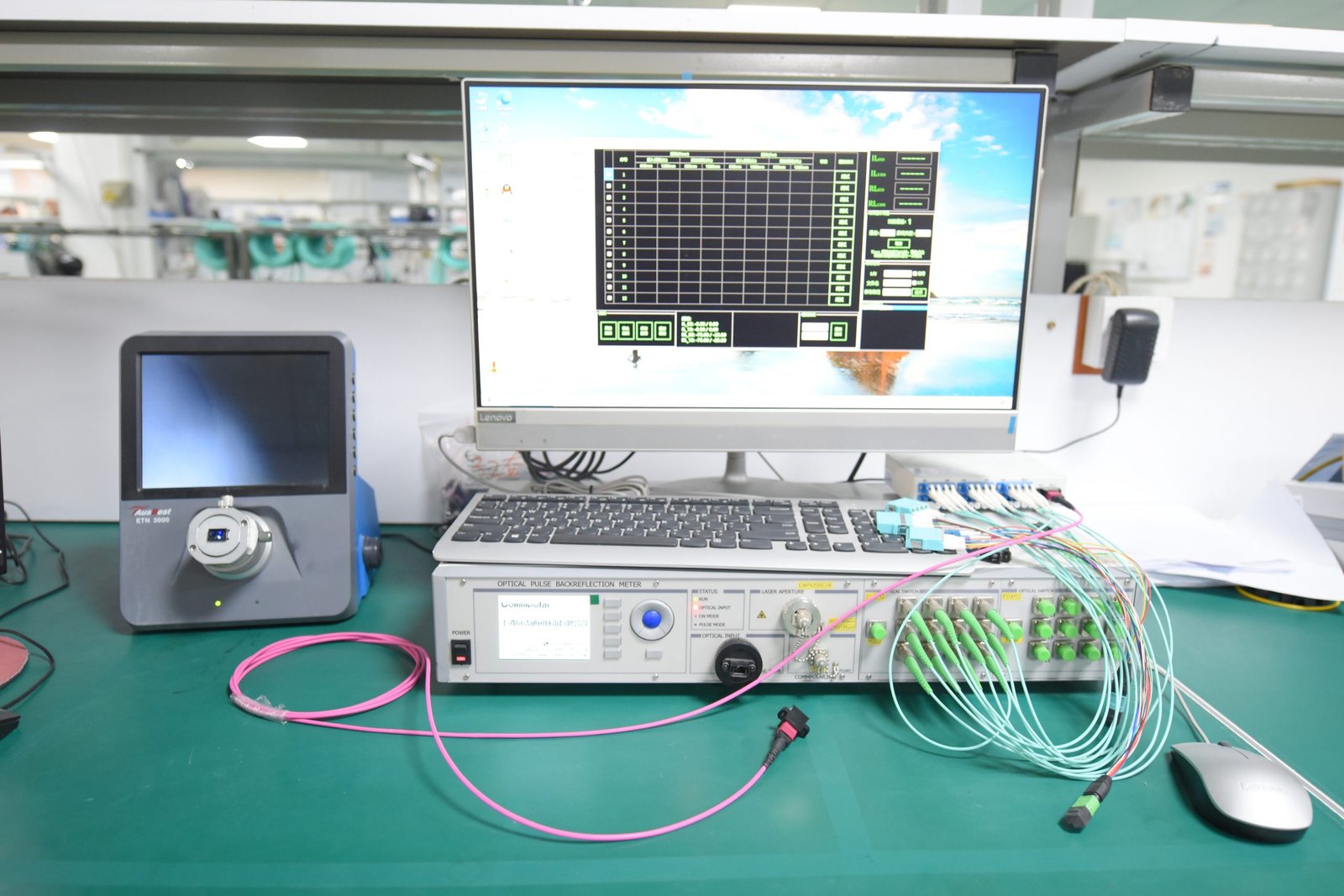
- 8-Fiber Configuration: Optimized for QSFP+ (40G) y QSFP28 (100G) transceivers, ensuring no fibers are wasted.
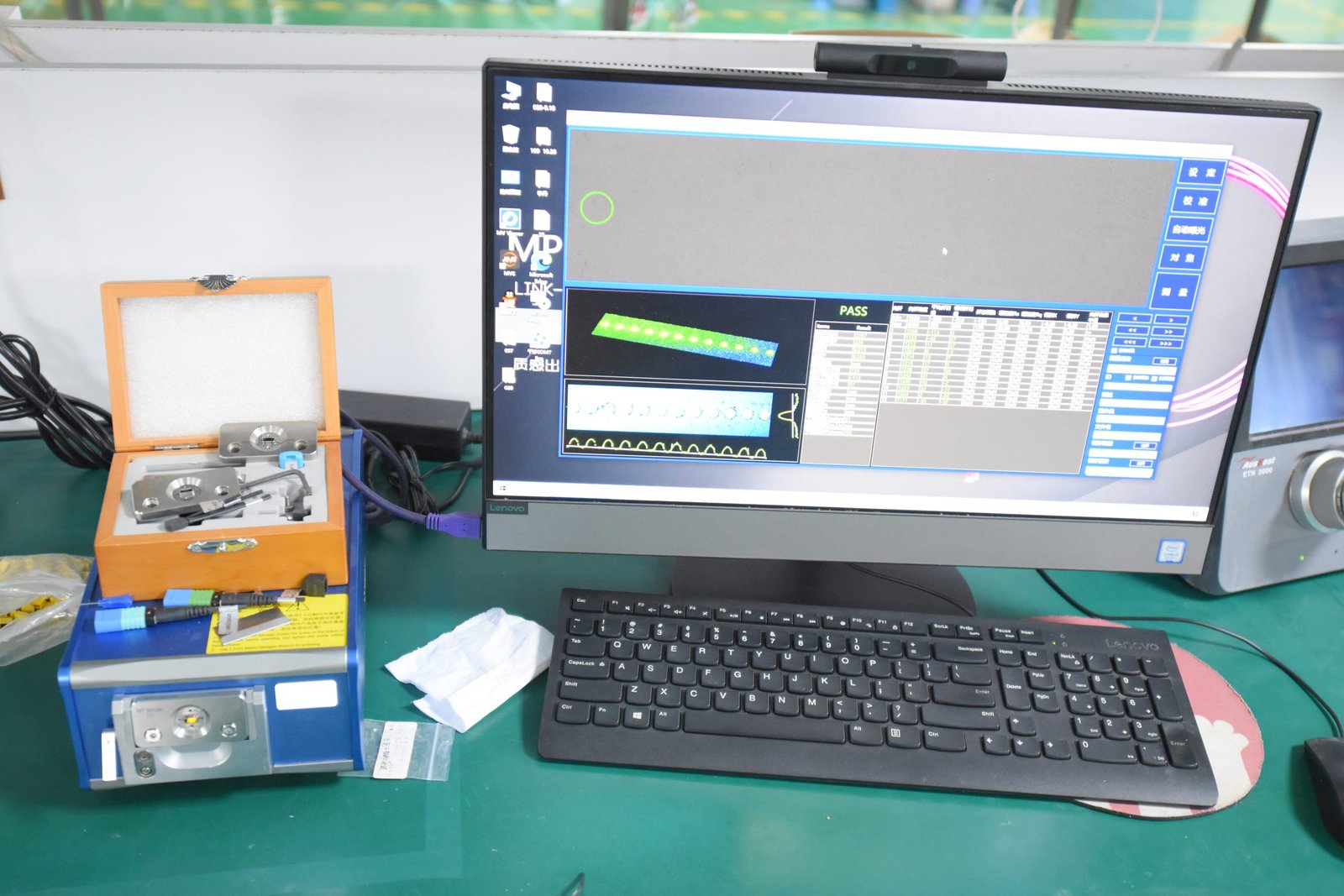
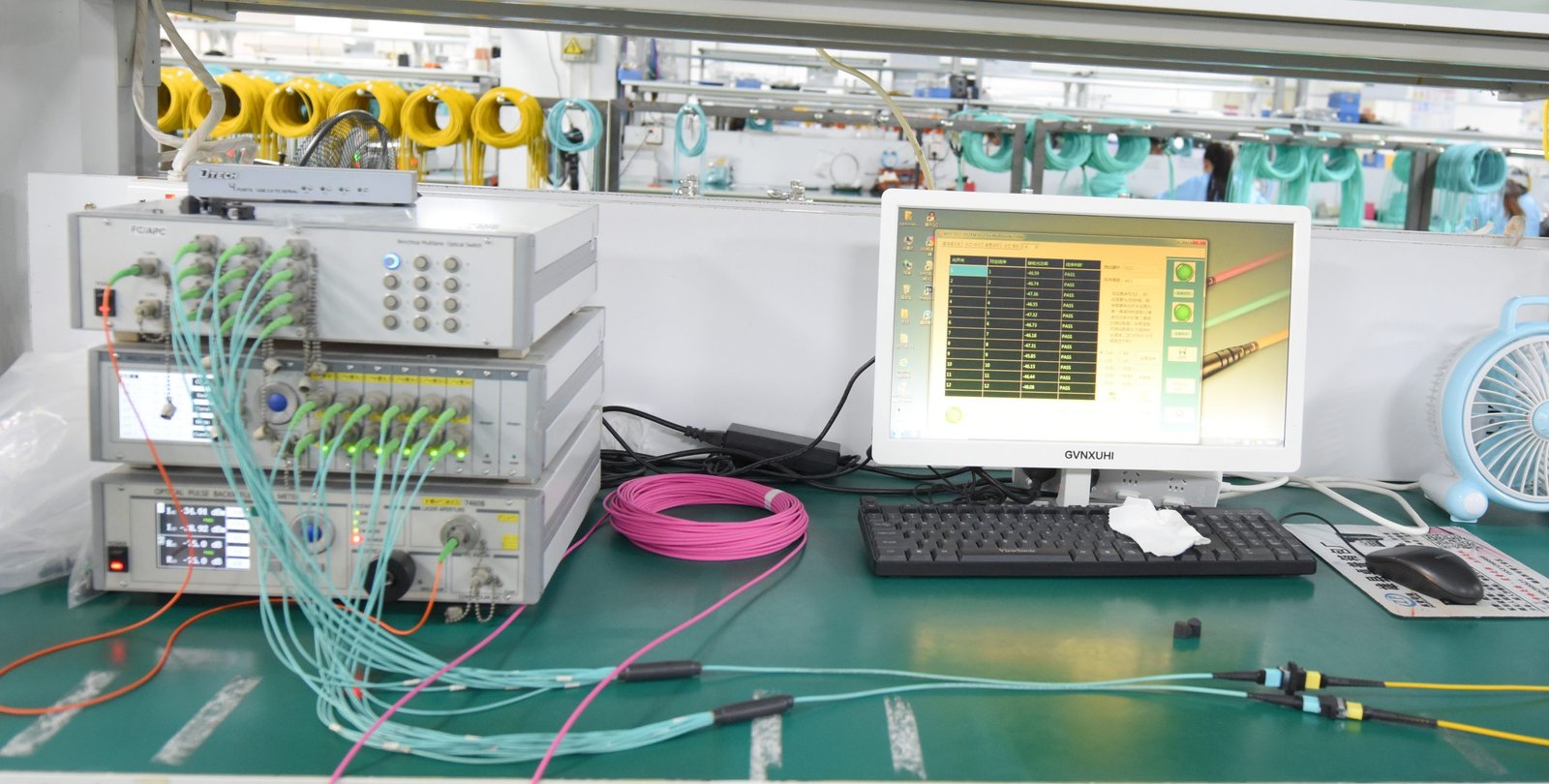
- UPC Polish: “Ultra Physical Contact” (blue/aqua connectors) ensures low insertion loss (dB) and high return loss.
- Plug-and-Play: Factory-terminated and tested to eliminate the need for field splicing or specialized tools.
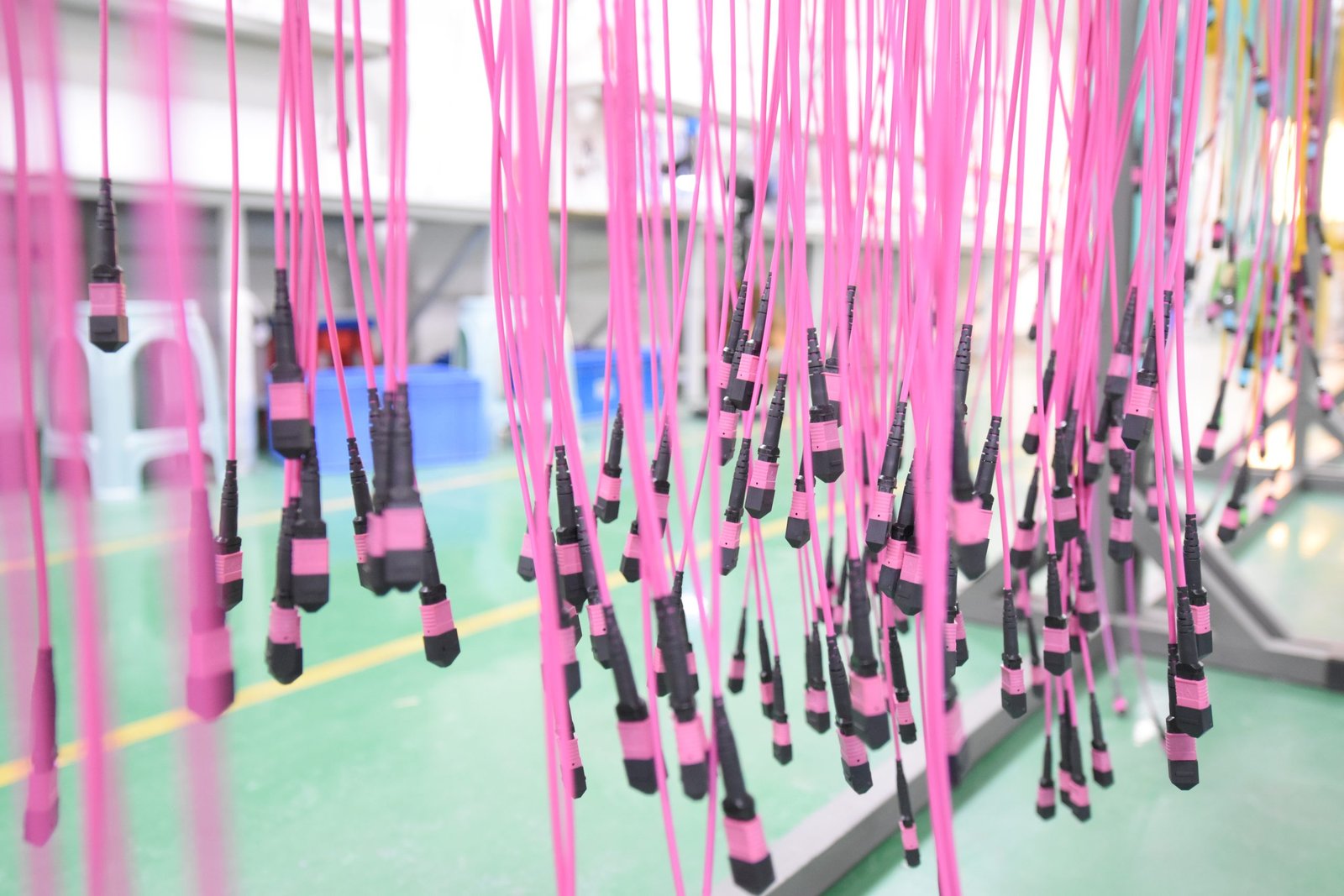
- Space Saving: Consolidates 8 fibers into a single MPO port, significantly reducing cable clutter in high-density racks.
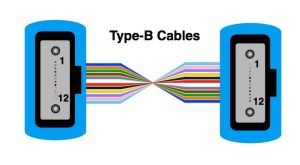
- Polarity Options: Typically available in Type B (Crossover) to ensure proper Tx/Rx communication between different equipment types.

Aplicaciones
- Port Breakout: Splitting a single 40G QSFP+ port into 4x 10G SFP+ connections.
- 100G Migration: Breaking down a 100G QSFP28 port into 4x 25G SFP28 links for servers or storage.
- Data Center Spine-Leaf: Connecting high-bandwidth Spine switches to multiple lower-bandwidth Leaf switches.
- High-Density Patching: Connecting MPO-based backbone cabling to existing LC-LC patch panels or legacy hardware.
FAQ (Frequently Asked Questions)
Q: Why use MPO-8 instead of MPO-12?
A: Most 40G/100G transceivers only use 8 fibers (4 to transmit, 4 to receive). Using an MPO-8 cable aligns perfectly with the hardware, preventing “dark” (unused) fibers in your infrastructure.
A: Most 40G/100G transceivers only use 8 fibers (4 to transmit, 4 to receive). Using an MPO-8 cable aligns perfectly with the hardware, preventing “dark” (unused) fibers in your infrastructure.
Q: Do I need a Male or Female MPO connector?
A: If you are plugging directly into a transceiver (like a QSFP), you almost always need a Female (Unpinned) connector. Male (Pinned) is typically used for connecting to other cables or panels.
A: If you are plugging directly into a transceiver (like a QSFP), you almost always need a Female (Unpinned) connector. Male (Pinned) is typically used for connecting to other cables or panels.
Q: What is the difference between UPC and APC?
A: UPC (Blue/Aqua) has a flat polish and is standard for most data centers. APC (Green) has an 8-degree angle polish and is used mostly in single-mode networks (FTTH/GPON) to minimize back-reflection.
A: UPC (Blue/Aqua) has a flat polish and is standard for most data centers. APC (Green) has an 8-degree angle polish and is used mostly in single-mode networks (FTTH/GPON) to minimize back-reflection.
Q: Can I use this for 400G networks?
A: Yes, but it depends on the transceiver. Many 400G DR4 transceivers use an MPO-8 or MPO-12 interface that can be broken out into 4x 100G LC connections using this same harness style.
A: Yes, but it depends on the transceiver. Many 400G DR4 transceivers use an MPO-8 or MPO-12 interface that can be broken out into 4x 100G LC connections using this same harness style.


 English
 Spanish