

In modern data centers and high-speed network infrastructure, fiber cabling density is increasing rapidly. More fiber links need to be managed within limited rack space, while technicians also need easier access for installation, inspection, and future maintenance. This is where a 1U 64-fiber MTP/MPO to LC sliding patch panel becomes a practical and efficient solution.
This type of patch panel is designed to convert high-density MTP/MPO backbone connections into standard LC duplex ports. It helps organize fiber distribution inside a 19-inch rack, making it suitable for data centers, enterprise network rooms, telecom equipment rooms, and structured cabling systems.
Rayoptic manufactures this 1U sliding patch panel with 4 × 16-fiber MTP/MPO to LC cassette modules, providing a total capacity of 64 fibras in only 1U rack space. The modular cassette design, sliding tray structure, aluminum cassette body, and pre-terminated fiber connections make it a reliable choice for high-density fiber management.
What Is a 1U 64-Fiber MTP/MPO to LC Sliding Patch Panel?
A 1U 64-fiber MTP/MPO to LC sliding patch panel is a rack-mounted fiber management unit used to connect high-fiber-count MTP/MPO trunk cables to LC duplex patch cords.
The rear side of the panel is typically connected to MTP/MPO trunk cables, while the front side provides LC duplex ports for patching to switches, transceivers, or other active equipment.
In this design, the 64 fibers are not managed as one complicated internal breakout. Instead, the panel uses four independent 16-fiber cassette modules.
The structure is simple and clear:
4 × 16-fiber MTP/MPO cassette modules = 64 fibers total
Each cassette converts one MTP/MPO-16 connection into LC duplex ports. This makes the system easier to install, test, identify, and maintain.
Where Is This Patch Panel Used?
This type of patch panel is mainly used in high-density fiber cabling environments, especially where MTP/MPO trunk cables are used for backbone cabling and LC duplex connections are required at the equipment side.
Typical applications include:
Data centers
Used for high-density fiber distribution between cabinets, switches, patching zones, and optical equipment.
Enterprise network rooms
Suitable for structured fiber cabling systems where space-saving and organized patching are required.
Salas de equipos de telecomunicaciones
Used for managing backbone fiber links and converting them into LC duplex connections for network equipment.
High-speed backbone cabling systems
Ideal for OS2 single-mode fiber networks requiring stable and organized fiber distribution.
For projects that require clean cabling, easy maintenance, and high port density, a 1U MTP/MPO to LC sliding patch panel is a practical solution.
1U 64-Fiber Sliding Patch Panel Overview
Rayoptic’s 1U 64-fiber MTP/MPO to LC sliding patch panel is designed for standard 19-inch rack installation. It provides high fiber capacity while keeping the structure compact and easy to manage.
The panel supports 64 fibers in 1U space, helping users save rack space and improve cabling organization. The sliding tray design allows the internal cassette modules to be accessed from the front, making installation and maintenance more convenient.
This design is especially helpful in data centers where cabinet space is limited and fiber connections need to be clearly arranged.
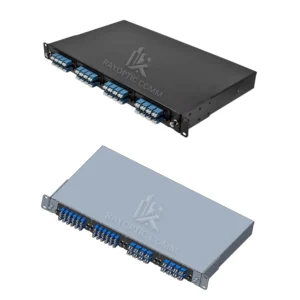
4 × 16-Fiber MTP/MPO Cassette Modules
The most important feature of this patch panel is the use of 4 × 16-fiber MTP/MPO to LC cassette modules.
Instead of using one large internal fiber breakout, Rayoptic divides the 64-fiber capacity into four independent cassette modules. Each cassette manages 16 fibers, making the whole panel more modular and easier to maintain.
This structure offers several advantages:
Each cassette can be managed as an independent 16-fiber unit.
Technicians can test or replace one cassette without disturbing all fiber links.
Different cassettes can be assigned to different network zones, cabinets, or equipment groups.
The internal fiber routing is cleaner and more organized.
For data center cabling, this modular design makes the patch panel easier to understand and easier to manage over time.
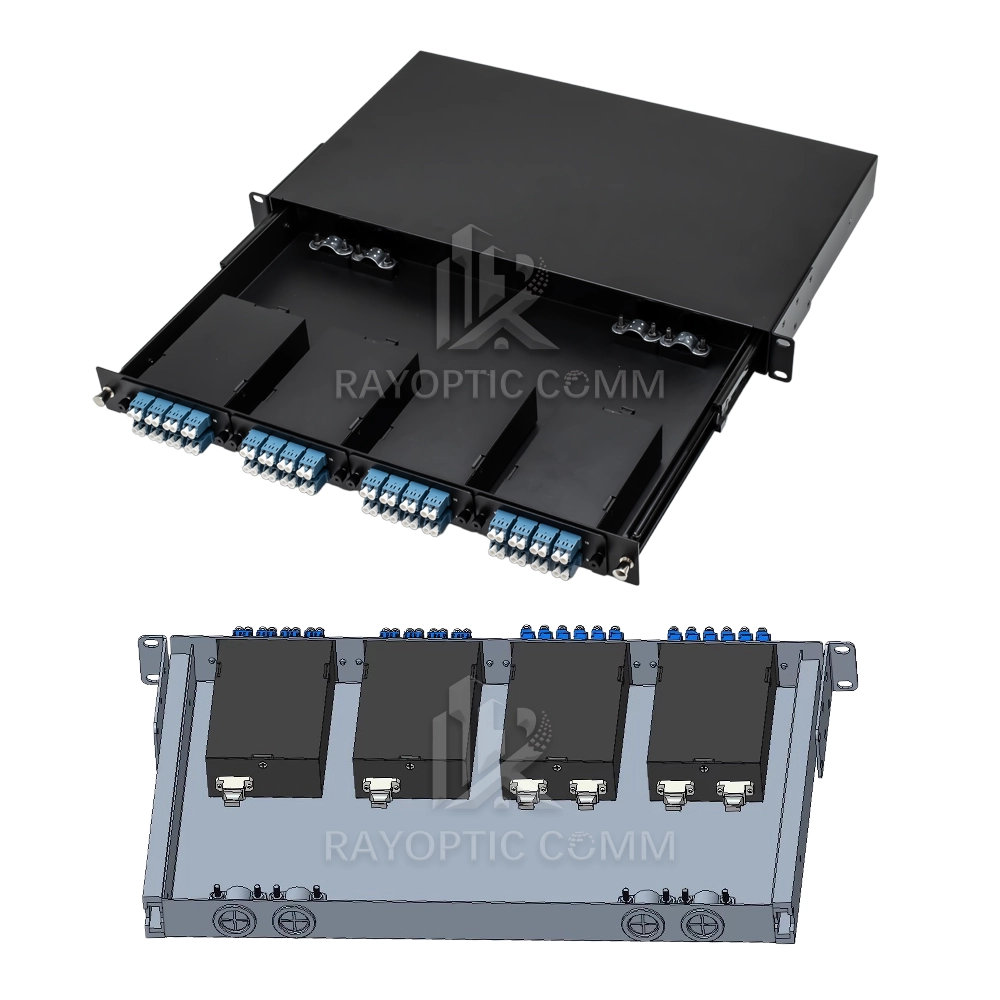
16-Fiber MTP/MPO to LC Cassette Module
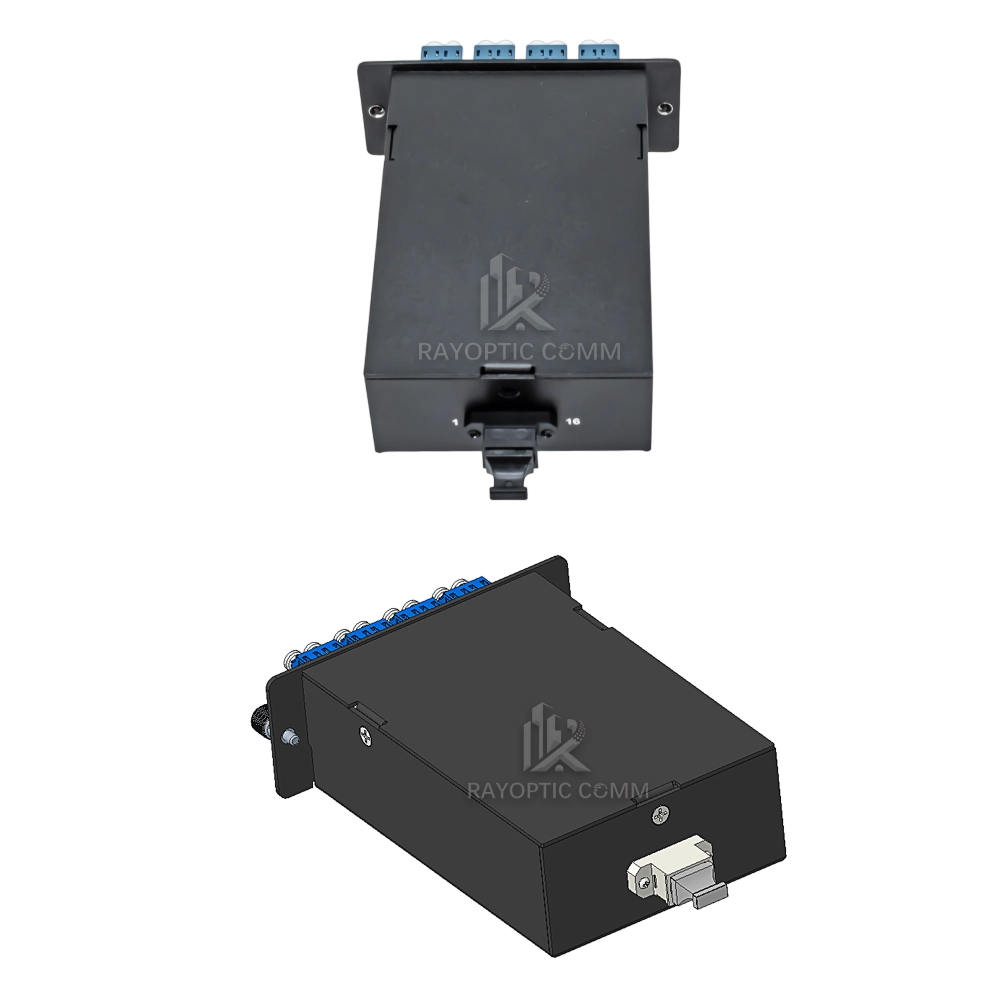
Each cassette module inside the panel is a 16-fiber MTP/MPO to LC cassette. The rear side connects to one MTP/MPO-16 interface, while the front side breaks out the fibers into LC duplex connections.
Since 16 fibers equal 8 duplex channels, each cassette provides 8 LC duplex connections. With four cassette modules installed, the full panel provides:
4 cassettes × 8 LC duplex ports = 32 LC duplex ports
This design provides a clean transition from MTP/MPO trunk cabling to LC duplex patching. It reduces messy fiber breakouts inside the rack and helps keep the cabling area neat.
Rayoptic’s cassette body is made of aluminum, offering a lightweight and durable structure for high-density fiber management. The aluminum cassette housing also helps protect the internal fiber routing and provides a professional appearance.
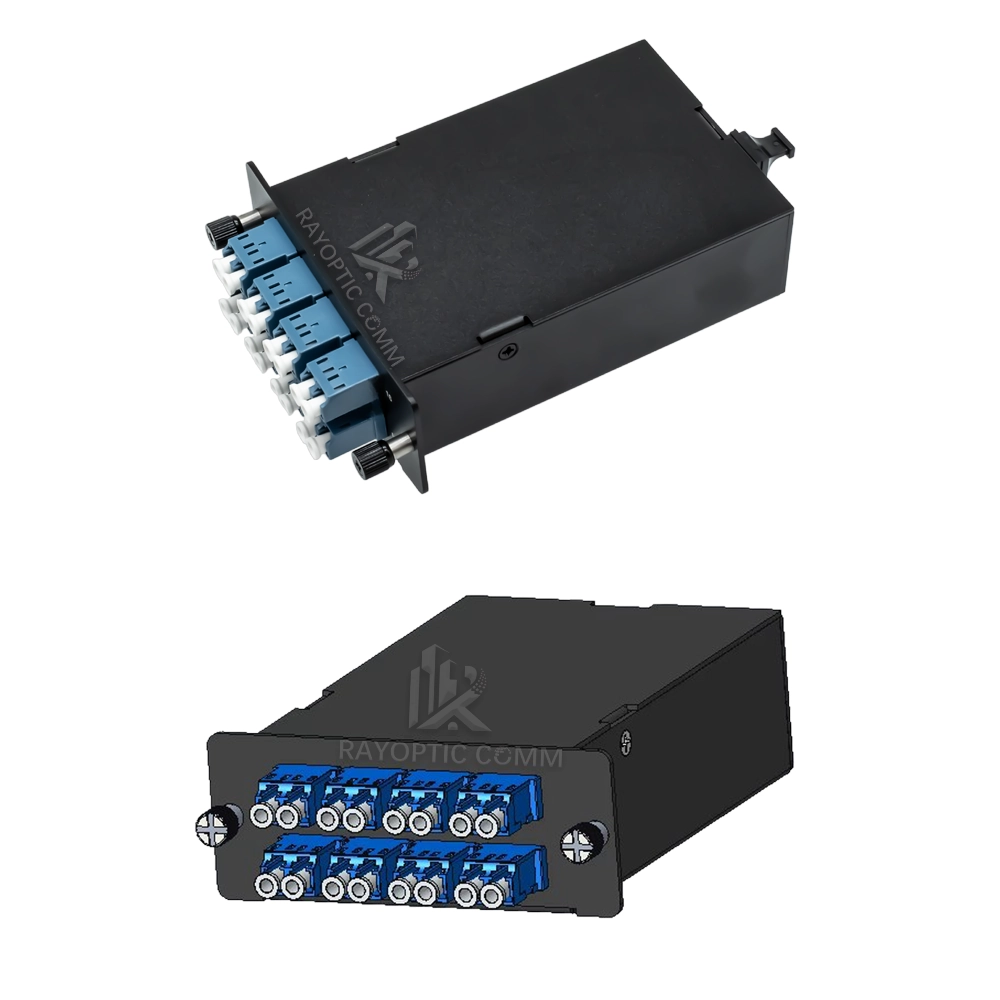
32 LC Duplex Ports for Front-Side Patching
The front side of the patch panel provides 32 LC duplex ports, allowing technicians to connect LC patch cords directly to switches, transceivers, or other optical equipment.
LC duplex ports are widely used in data centers and network rooms, making this panel compatible with many existing cabling systems. The front-access LC layout helps technicians identify, patch, and manage each connection more easily.
For daily operation and maintenance, front-side LC patching is much more convenient than handling loose breakout fibers inside the rack.
This clear front port arrangement helps improve:
Cable identification
Patching efficiency
Maintenance convenience
Rack cable organization
Long-term network management
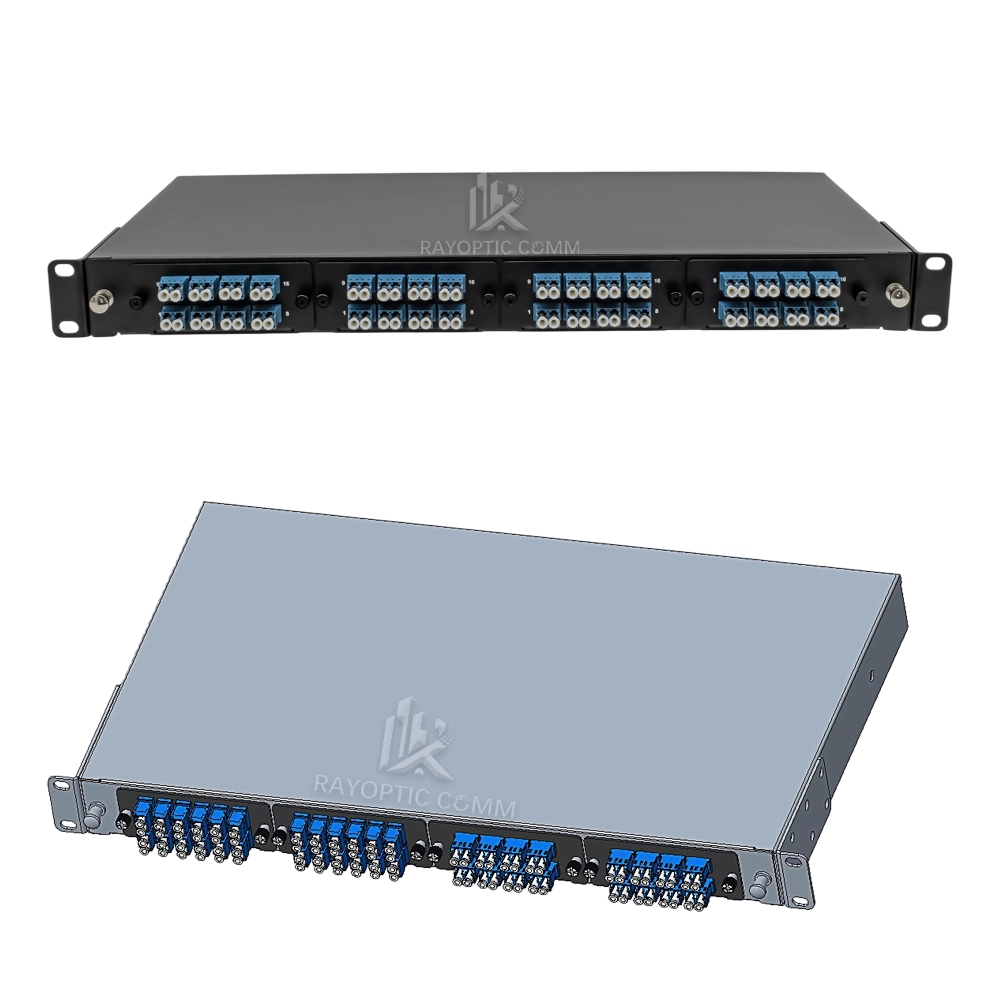
Rear MTP/MPO Ports for Backbone Cabling
While the front side is used for LC duplex patching, the rear side of the panel is designed for MTP/MPO backbone connections.
The rear MTP/MPO ports allow high-density trunk cables to be connected directly to the cassette modules. This keeps the backbone cabling compact and organized at the rear of the rack.
The combination of rear MTP/MPO input and front LC output creates a clear cabling structure:
Rear side: MTP/MPO trunk cable connection
Inside: 4 × 16-fiber cassette modules
Front side: LC duplex patching interface
This structure is especially useful for data center backbone cabling, where many fiber links need to be routed between cabinets or network zones.
Sliding Tray Design for Easier Access
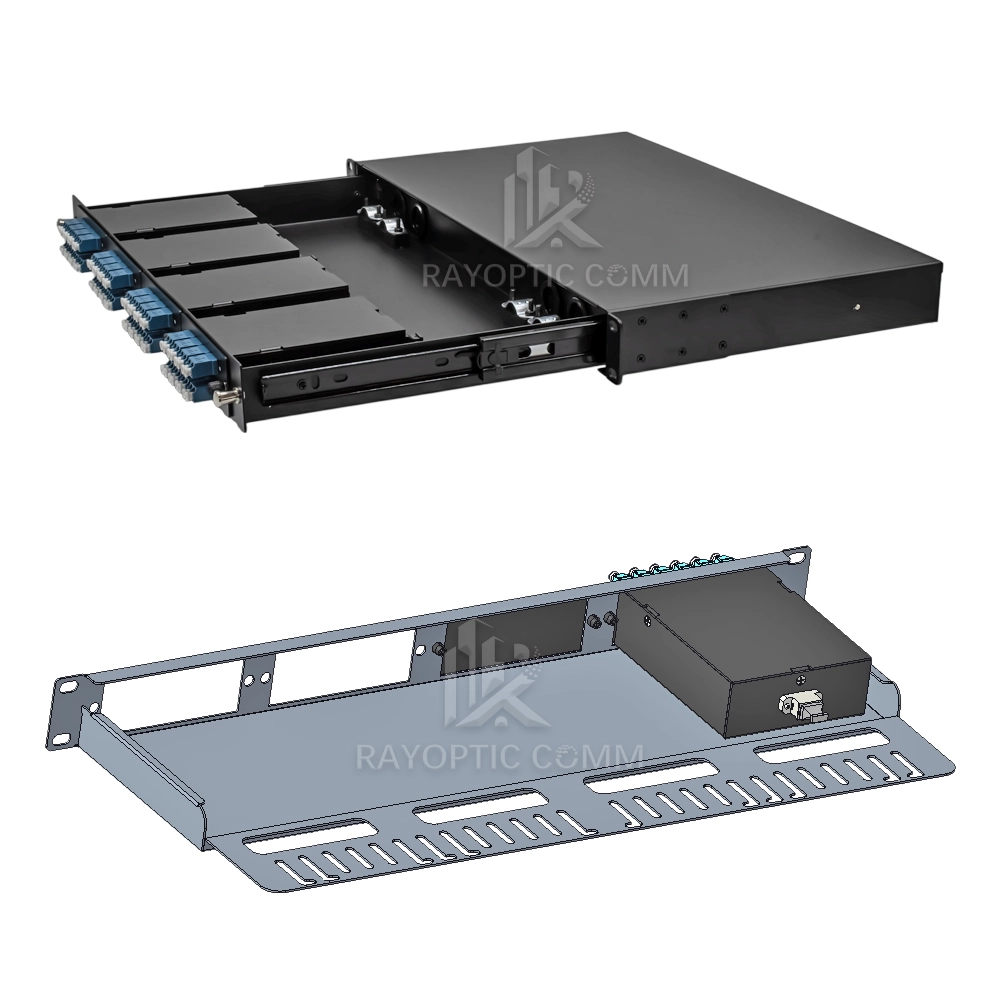
Another key feature of this product is the diseño de bandeja deslizante.
In high-density racks, it can be difficult to access internal fiber connections after installation. The sliding tray allows technicians to pull the panel forward from the rack, providing easier access to the cassette modules and internal fiber routing.
This makes installation, inspection, cleaning, testing, and maintenance much more convenient.
The sliding tray design can help reduce:
Installation difficulty
Maintenance time
Risk of disturbing neighboring cables
Cable routing confusion inside the rack
For data centers and telecom rooms where equipment is densely installed, this front-access sliding structure is a valuable feature.
Why Choose Rayoptic’s 1U 64-Fiber MTP/MPO to LC Patch Panel?
Rayoptic manufactures this patch panel for high-density fiber cabling applications, with attention to practical installation and long-term maintenance.
Key features include:
1U 19-inch rack-mount design for standard cabinet installation.
64-fiber capacity in a compact rack space.
4 × 16-fiber MTP/MPO cassette modules for modular fiber management.
32 LC duplex front ports for convenient equipment-side patching.
Rear MTP/MPO ports for high-density backbone trunk cabling.
Sliding tray structure for easier front access and maintenance.
Aluminum cassette body for lightweight and durable construction.
OS2 single-mode fiber option for long-distance and high-speed network applications.
Low insertion loss performance for reliable optical transmission.
This product is designed for customers who need a compact, modular, and easy-to-maintain fiber distribution solution.
Conclusión
A 1U 64-fiber MTP/MPO to LC sliding patch panel is an efficient solution for modern high-density fiber networks. It helps convert MTP/MPO backbone cabling into LC duplex patching, while keeping the rack layout clean and easy to maintain.
Rayoptic’s design uses 4 × 16-fiber MTP/MPO cassette modules, making the 64-fiber capacity more organized and easier to manage. With front LC duplex ports, rear MTP/MPO backbone connections, aluminum cassette bodies, and a sliding tray structure, this patch panel is well suited for data centers, telecom equipment rooms, enterprise networks, and structured cabling systems.
For projects that require high fiber density, reliable performance, and convenient maintenance, Rayoptic’s 1U 64-fiber MTP/MPO to LC sliding patch panel provides a practical and professional cabling solution.


 English
 Spanish